




Promo-LEX Association decided to change the paradigm in order to determine the Chisinau authorities to find new ways of addressing transnistrian officials’ abuses against human rights.
To prevent such illegalities by the so-called prosecutors, judges and politicians on the left bank of Nistru River, the Association’s lawyers opt for individual liability, based on a list of persons involved in unlawful acts drawn up following the ECHR decisions.
In March 2020, Promo-LEX association drew up a list of persons liable for the transgressions committed on the left side of the Nistru River, in order to determine Chisinau authorities to take action against the flagrant infringements of human rights. It is already the third such annual report submitted by Promo-LEX Association.
The list is based on the ECHR decisions issued in 2019 with regards to the various violations committed by the separatist regime of Tiraspol by the action of its officials from law enforcement agencies and the so-called judiciary operating on the other bank of the Nistru river.
According to experts, the notion of ‘human rights’ is perceived abstractly on the left bank of the Nistru River, where the separatist authorities have developed an abusive pseudo-legal justice system over the past three decades.
‘It is known that human rights are violated in transnistrean region. Many of those who are mistreating people out there, under the guise of negotiations and the pretext that sins are forgotten as time goes by, are living very well, and then retire and buy businesses and real estate. They move to other countries, etc.’ says Alexandru Postica, Director of the Association’s Human Rights Program.
For many years already, human rights organisations from Moldova have been warning of the serious cases of Moldovans losing their health, wealth and dignity because of abuses that seem like from another century.
Chisinau authorities say they can do nothing when it comes to holding accountable someone from the left bank for abuses against Moldovan citizens.
Torture, ill-treatment and abusive takeover of ownership of real estate or businesses – all these were applied by police and court systems controlled by Tiraspol regime, right under the eyes of Chisinau authorities, which see these abuses committed on the both banks.
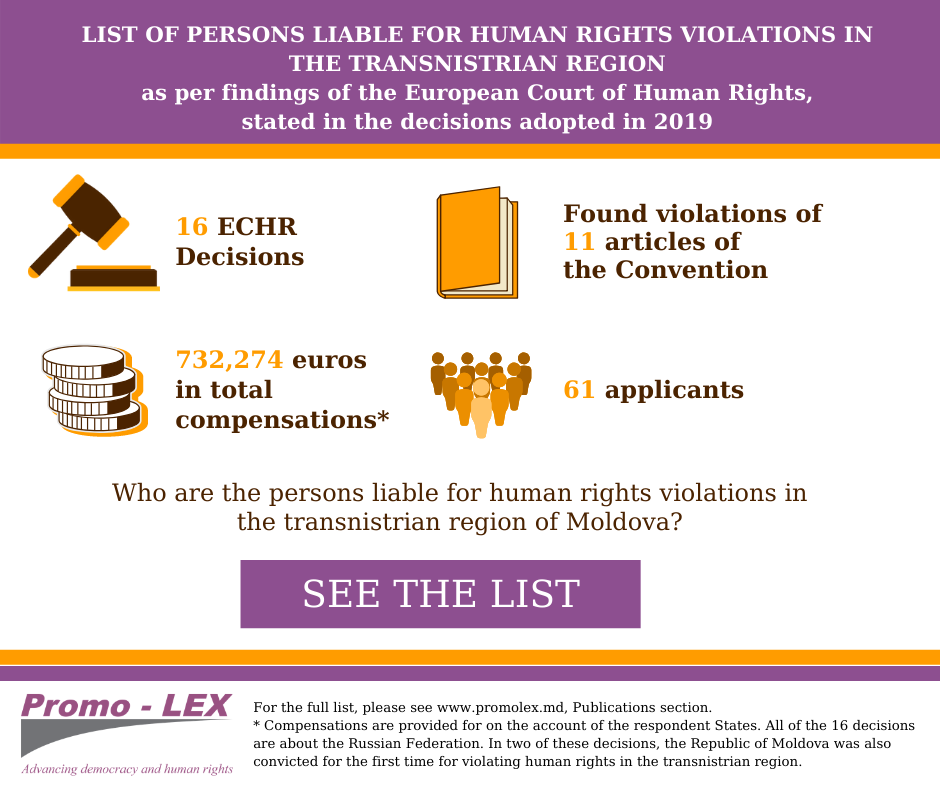
The above mentioned list includes 16 ECHR decisions from 2019, at least 11 violations of the European Convention of Human Rights’ provisions. The Republic of Moldova acceded to this document back in September 1997.
According to the Constitution of the Republic of Moldova, the international treaties, to which the state is a party, prevail over the national human rights law. Nonetheless, the reality in this field is different.
‘This document aims to analyse the situation. We tried to be as equidistant as possible and to work with reliable documents. In this case we refer to several ECHR decisions and violation of particular rights for particular periods’, the lawyer added.
In 2019 only, ECHR ruled in favour of at least 61 applicants. They are all Moldovan citizens who suffered from the injustice of Tiraspol authorities.
Both the Republic of Moldova and, for the most part, Russia, were obliged to pay compensations of EUR 732.274. The Russian Federation was condemned by Strasbourg Court for supporting the unconstitutional regime of Tiraspol, but it has never paid any of the compensations awarded by ECHR judges.
Cases Won at ECHR
The cases won last year by Moldovan citizens at ECHR have one common feature — the abuses committed by Tiraspol system and its officials.
The Strasbourg judges decided on the Babchin vs. Republic of Moldova and Russia case that the applicant had been detained for five years and one month in inhuman and degrading conditions in four places of detention in transnistrian region.
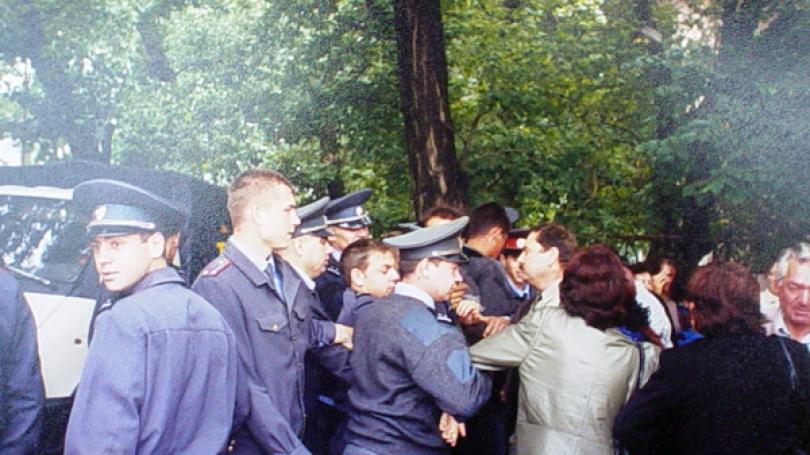
Militia during a protest on the left bank of the Nistru River. Photo: CIJM
ECHR found guilty of abuses at least nine persons from Tiraspol administration, including the former separatist leader Evgheni Sevciuk.
In the case of Iovcev and others, the Russian Federation was also condemned to pay compensations of EUR 131.000 for intimidating and persecuting teachers, pupils and parents from 5 Latin-script schools in the region. At least 19 people were allegedly involved in these transgressions, including prosecutors, investigators, judges and leaders Evgheni Sevciuk and his wife Nina Stanski.
Besides, in the case of Grama and Dirul, ECHR established that several officials from Transnistrean region violated the right to protection of property, guaranteed by Article 1 of the Convention. The judges declared the seizure of applicants’ personal cars as illegal because it was not provided by the national law of the Republic of Moldova.
Executors of the Abusive Transnistrean System
Promo-LEX disclosed the names of several judges, militiamen, prosecutors and custom officials in the list.
Some of them are Nikolaeva I.I – judge in the Tiraspol Court; Ustinov V.A., Marciuc L.M., Savitkoi A.V – judges in the Supreme Court of Tiraspol; Krizhanovskii Alexei – investigator in the militia of Tiraspol and Tverdohleb Boris – prosecutor of Tiraspol; Teresenko Andrei V. – Head of the pre-trial detention center of Tiraspol militia (IVS Tiraspol); as well as the former leader Evgheni Sevciuk.
Nonetheless, Sevciuk and Stanski, were not prosecuted, ‘they have no criminal convictions and are not wanted in the Republic of Moldova’.
Moreover, they were accommodated by the authorities of the Republic of Moldova in the center of Chisinau for several months in the summer of 2017, and then were let to travel freely to the Russian Federation, together with their families, after losing power in favour of Vadim Krasnoselsky, the current separatist leader.
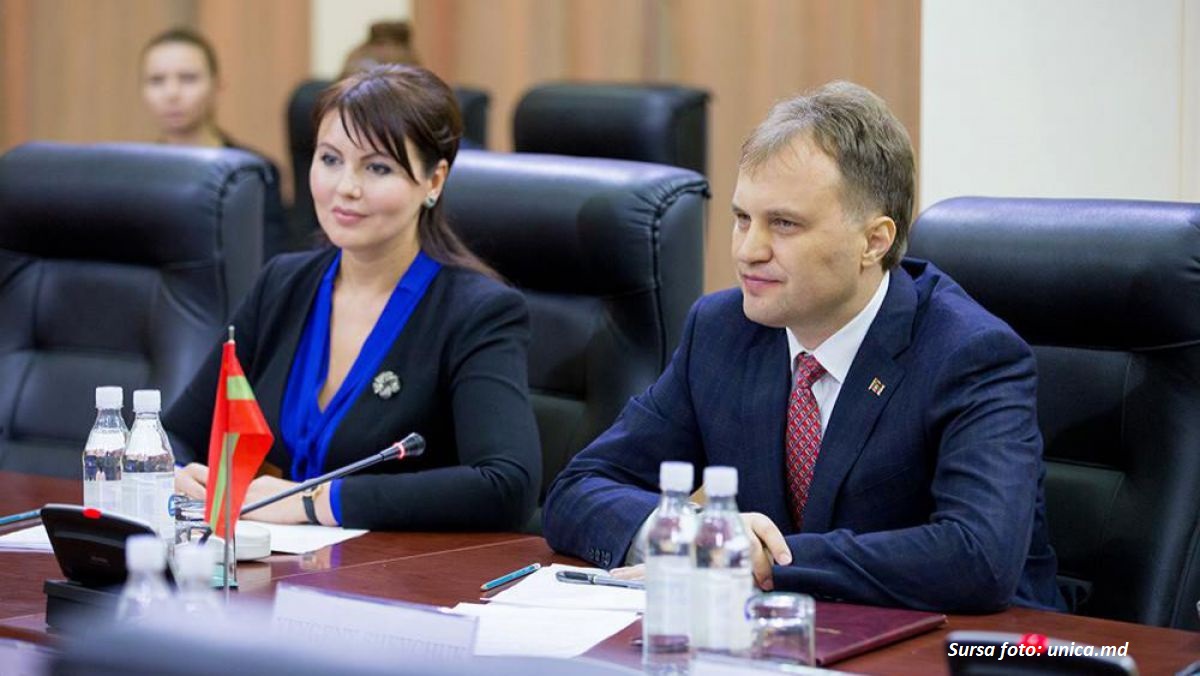
Former separatist leader of Tiraspol, Evgheni Șevciuk, and the so-called former head of transnistrean diplomacy Nina Ștanski. Photo: unica.md
In 2017, the later was declared wanted by the Prosecutor’s Office of Criuleni for ‘impeding the exercise of electoral rights or the activity of the electoral bodies’. Eventually, in 2014, the Prosecutor’s Office of Bender municipality closed the criminal case on the basis of the Article 275, section 4 – ‘expired limitation period’. In 2016, the Chisinau authorities stopped the prosecution of Krasnoselski.
The list published by Promo-LEX contains over 130 officials of the separatist regime, who committed human rights abuses.
Tens of Moldovan citizens were detained in inhuman conditions in pre-trial detention centers of the militia of Tiraspol, Rabnita, Dubasari, Slobozia or Tighina, Penitentiary No 1 Hlinaia (Grigoriopol), penitentiaries No 2 and No 3 of Tiraspol, etc.
‘In different periods, transnistrean officials in the fields of justice, militia, prosecutor’s office and executive bodies signed documents that served as pretext for limiting human rights. We are hence talking about complicity in committing crimes’, said Alexandru Postica.
ECHR judges decided that the 61 applicants were illegally convicted in 2019, because transnistrian courts of law cannot be qualified as ‘tribunals established by law’.
Cases brought to ECHR are various. These include illegal seizure of material goods, lack of health care in detention, physical ill-treatment and illegal detention, lack of right of defense in court and lack of access to a fair trial, or inhuman and degrading conditions of detention in the transnistrian detention facilities where the applicants were kept in custody.
A Need to Change the Approach
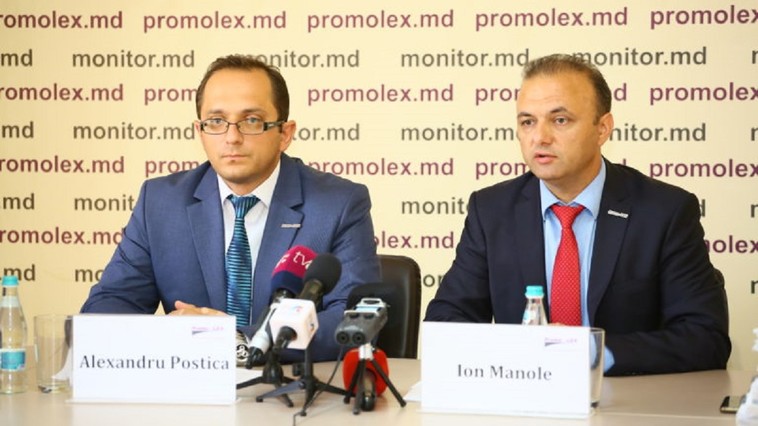
Promo-LEX lawyers, Alexandru Postica (left) and Ion Manole (right) during a press conference.
Though Promo-LEX Association has been warning for years, it decided to change the paradigm in order to determine Chisinau authorities to find new solutions for these situations that affect Moldovans citizens.
‘We are talking about individual accountability of people committing unlawful acts. If we continue with the same approach of focusing on all problems at once, we won’t have any progress for other 20-30 years. We want another approach – individual accountability. We submit to the Moldovan authorities, which claim they cannot solve individually the problems of citizens in Transnistria, a list of people involved in certain unlawful acts, including money laundering, torture, murder, etc. Moreover, we provide the Court’s findings that highlight these unlawful acts’, said the lawyer.
USA and other European countries, like Germany, the Netherlands, allow to hold liable persons who commit acts of torture, human rights violation, regardless of whether these unlawful acts were committed on their territory or not.
‘For instance, the acts of torture committed by a militiaman from the left bank of the Nistru River can be convicted in the Netherlands or Germany, if the offender is on the territory of that country or is somehow connected with its justice system. This principle was used to hold accountable the Donbas terrorists. Our activity aims to address this requirement’, the lawyer added.
According to Promo-LEX data, some of the militiamen, judges, former leaders – presidents – from transnistrian region ‘are now living well in European countries like Germany, the Netherlands, Spain, Ukraine with a wealth gained on the other’s pain’.
Despite public appeals and requests, the General Prosecutor’s Office does not react.
‘The General Prosecutor’s Office must investigate if these cases have criminal components. Depending on case, the Office has to find out to which jurisdiction (territory) the respective citizens belong and to send this official request further. The General Prosecutor’s Office has the obligation to express its opinion about this list’, said the lawyer Alexandru Postica.
According to him, all of the notifications made by the association ‘are taken note of’.
‘The truth is that criminal cases were opened for each case of illegal detention that we are managing. If we are talking about the violation of Article 5 of the Convention [the right to freedom and safety], all files were merged in a single procedure and were suspended until offenders are identified’, he added.
Despite the requests of the Center for Investigative Journalism of Moldova, the Prosecutor’s Office said nothing about the actions taken by Moldovan prosecutors with regards to cases of human rights violations in the Republic of Moldova.
Moreover, the transnistrean police was involved in several kidnappings on the constitutional territory of the Republic of Moldova during the last years.
On 27 July 2018, the former Minister of Internal Affairs from Tiraspol, Ghenadi Kuzmiciov was allegedly kidnapped near Chisinau by the law enforcement bodies from the transnistrian region. The operation was allegedly performed with the help of constitutional law enforcement bodies of the Republic of Moldova.
According to Kuzmiciov’s wife and Promo-LEX lawyers, Moldovan patrol inspectors stopped the car near Chisinau, under the pretext of exceeding the speed limit. Immediately after the documents were checked, four individuals dressed as civilians got out of a silver SUV, took him from the Moldovan police officers and forced him into their car. After that they drove in an unknown direction.
On the other hand, for such cases to be reviewed, the lawyer of ‘Apriori’ Association from Tiraspol, Stepan Popovschi, suggested to set up a common court that would function according to ECHR principles.
‘A Human Rights Court was established in Bosnia and Herzegovina, which is great. But we are abandoned by the Republic of Moldova to survive on this territory’, he said.
Stepan Popovschi’s proposal was rejected by Vasile Sova, the former Minister for Reintegration, the current Presidential Advisor, on the grounds that ‘it smells like Kosovo’.
‘Tiraspol authorities are not obliged to comply with these decisions [of the ECHR]. The Tiraspol regime it is not a signatory of the European Convention. It is an issue related to Russia and Moldova […] I think there is no one in Moldova who wants to solve this problem from a legal perspective. Unfortunately, the interests of Chisinau authorities and of the great power [Russia] match’, he concluded.
What Does the State Say?
The Reintegration Policies Bureau under the Government’s Office reported to have a limited set of tools it can use to intervene in the transnistrian region and settle the cases of human rights violations.
‘Chisinau authorities have a range of tools of diplomatic, political and legal influence on people on the left bank of the Nistru River who violate human rights. The constitutional authorities use all these tools whenever needed. The human rights dimension in Transnistrian Region is hence addressed on several communication platforms’, informed us the Reintegration Bureau.
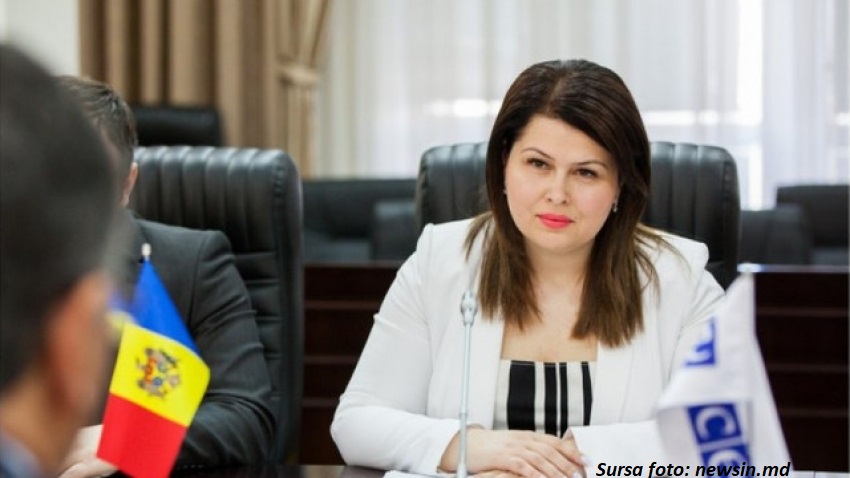
Cristina Lesnic, Head of Reintegration Policies Bureau. Photo: newsin.md
These include 1+1 and 5+2 negotiations, Joint Control Commission for the situation in the Security Area (JCC), reporting cases of human rights violations in region to the Council of Europe Commissioner for Human Rights, UN Special Representative, Ombudsperson of Chisinau.
‘Additionally, the observance of human rights on the left bank of Nistru River is reflected in the reports of European Committee for the Prevention of Torture and Inhuman or Degrading Treatment or Punishment (CPT) of the Council of Europe and reports of Thomas Hammerberg, the United Nations Senior Expert on Human Rights’, the officials said.
Besides, every year the European Union adopts decisions on keeping a number of persons from the so-called transnistrian administration on the sanctions list.
‘Note that ECHR decisions on cases from the transnistrian region usually absolve the Republic of Moldova from guilt, because the country makes positive efforts in a territory where it does not exercise effective control. There is also the Parliamentary platform, as well as NGO’s notifications that can trigger public authorities to take measures’, states the Reintegration Policies Bureau’s response.
The article is developed under the ‘Strengthening the Observance of Human Rights in the Transnistrian Region’ Project, implemented by Promo-LEX Association with the financial support of the National Endowment for Democracy.