




 Although currently torture is not in the public eye in Moldova, in reality this phenomenon, which decreased slightly, still exists. During the anti-torture week, we intended to identify and discuss the most important gaps and problems with the documentation, investigation of cases of torture and rehabilitation of its victims.
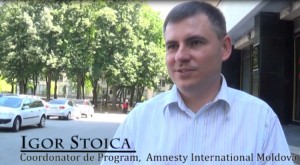
Igor Stoica, Program Coordinator, Amnesty International Moldova told us about the documentation of cases of torture: Cases of torture are documented in two ways: universal and legal. The first way is the Prosecutor’s Office, which by law and the Code of Criminal Procedure must receive all complaints, react promptly, initiate criminal cases against the torturer, make statistics and place them on the website of the Prosecutor’s Office. This is the first way. The second way is us, the organizations, working with victims and lawyers on a daily basis.
We work with these people, without formally receiving a complaint on paper, we hear their story, discuss the problem, the caused trauma and the remedy, where they should go, what they should do, if it is a civil or criminal case.
This documentation is a huge problem; the Prosecutor’s Office does not always cooperate in an efficient, good and positive way with non-government organisations and lawyers. The Prosecutor’s Office sometimes ignores us, the courts delay the examination of criminal cases, which is another problem. We document them, we present them, but cases are not prosecuted and the courts delay their examination. These are the two major problems that we face every day.
Our authorities are obliged by law to ensure decent and human treatment of any person that have to deal with. The Prosecutor’s Office shall accept the written complaint as an existing fact, not to deny and reject it as an illusion or as something abstract, as it is doing sometimes by rejecting the claims without any grounds. Any complaint or request shall be examined in detail and accepted. This is the main problem and our recommendation is to accept the complaints and bring them before the court. The second recommendation is for the courts to examine promptly these files and punish the torturers by depriving them of liberty. No suspended punishments, no unjustified acquittal, but real punishments. And then the society will change.
Material developed during the anti-torture week that marks the International Day in Support of Victims of Torture – 26 June. Documentation, investigation of torture and rehabilitation of victims: gaps and solutions – a Promo-LEX initiative.