




 During the past years, the Republic of Moldova made important steps to improve political parties’ funding regulations. However, we have several shortcomings in implementing laws, either due to parties’ resistance or to the fact that the authorities in charge of oversight and control lack capacities.
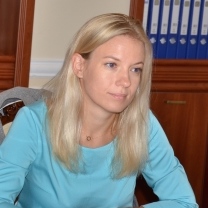
We spoke to Daria Paprocka – PhD in political sciences, with a wide work experience in different international organizations (OSCE/ODIHR, Venice Commission) and in the Republica of Moldova, about the most important aspects regarding the funding of the political parties from the Republic of Moldova, but also about who and how supervises their money. Daria Paprocka is the Promo-LEX expert in the field of political parties funding within the Project entitled „Fighting Political Corruption in the Republica of Moldova by Improving Political Parties’ Funding Regulations and Civic Oversight”.
- How would you describe the current situation regarding the financial management of political parties in the Republic of Moldova?
When it comes to financial management of the regular functioning of political parties in Moldova a lot needs to be done. There needs to be a bigger clarity on the size of parties’ membership and on fees the members introduce, donations from private and legal entities need to be registered with due diligence and the manner in which the money is spend both at the central and at the territorial level is yet to be defined by many parties. The recent changes to the Law on Political Parties, which entered into force at the beginning of this year, will certainly stimulate a greater transparency of political parties’ financial management. It is definitely needed given the disillusionment of many Moldovans with the current political landscape.
- Will the state funding contribute to a level playing field on Moldova’s political landscape?
Certainly it is not a remedy that will work in an instant, but yes – it is generally believed that state funding may achieve a greater equality between parties and limit undue influence on political parties as the need for private funding would be reduced. Having said that, it is important that the level of state support should not make political parties completely reliant on state funding, for it could lead to weakening of links between parties and their electorate. In case of Moldova the introduction of state funding does not eliminate private funding, thus parties will still be reaching out to the electorate and nourish the civic engagement in the political process.
- Can membership fees be viable source of political parties financing in Moldova?
Generally membership fees and small donations rarely constitute a substantial part of political parties’ incomes. And Moldova is no exception to that rule. What’s more important is that legislation and political parties’ internal regulations clearly distinguish the membership fees from donations. The reason for that being there are no upper limits for membership fees and some countries use that to bypass donation limits. In case of Moldova, GRECO (Group of States against Corruption) recommended to take appropriate measures to limit the very risk that parties’ membership fees may be used to circumvent the transparency rules applicable to donations. Consequently, such provisions have been introduced to the political financing legislation.
- Will the current legislation protect Moldovan politics from undue influence of the private sector?
My understanding of the latest changes to the Law on Political Parties is that this was precisely the aim of the legislator – to introduce more transparency to political financing and to protect Moldovan politics from undue influence of the private sector. A number of provisions have been introduced to achieve it. Introduction of the discussed already state funding, legal requirements related to the accountancy of membership fees and donations, the spending limits of the latters – to mention just a few key ones.
- What is your opinion about the level of limits for donations from private and legal persons (200 and 400 average salaries respectively)?
There is couple of reasons for introducing limits for donations. First, designing any system of political financing it is important that the money does not prevail over the voice of citizens and second, which actually stems from the first, is to limit the possibilities of undue influence and corruption. For those objectives to be met the donations limits have to be set a level which encourages political parties to look for many donors rather than depend on few. Current donations ceilings, with the average Moldovan salary calculated at the level of about 4,500 lei amount to 900,000 lei for a private person and 1.8 million lei for a legal entity. It is unlikely that being set at such high levels they will serve their purpose of diversifying the political parties’ sources of donations.
- OSCE/ODIHR recommended considering revision of the ban on donations on out-of-country income. What is your opinion on the subject?
The Committee of Ministers of the Council of Europe recommends that states should specifically limit, prohibit or otherwise regulate donations from foreign donors, reason for that being to protect a country against an improper and interfering foreign influence. I appreciate that this is the reason for ban of out-of-country donations in Moldova. But at the same time, Moldova’s situation, with 15% of the voters working abroad, is particular and the ban disfranchises a large part of the citizenry from the possibility to actively participate in political life of their country. It would be worthwhile to examine legal possibilities that would on one hand allow Moldovans living abroad to support financially political parties of their choice and on the other hand still protect Moldovan political landscape from an improper foreign influence.
- Will vesting the CEC with the oversight responsibilities contribute to the transparency of the political funding?
Vesting the CEC with the oversight responsibilities implements the GRECO recommendation to mandate an independent central body, endowed with sufficient powers and resources and assisted by other authorities where necessary, so as to allow the exercise of effective supervision, the conduct of investigations and the implementation of the regulations on political funding. With the latest legislative changes to the Law on Political Parties the CEC is mandated to supervise the funding of both election campaigns and political parties in general. Under the amended Law the CEC will be receiving financial information from parties and electoral contestants as well as from other state bodies, therefore it will have a comprehensive overview of political finances. I believe all those provisions will allow the CEC to perform their oversight duties in the manner, which will contribute to the transparency of the political funding.
- According to your assessment until now – does the external oversight contribute to the political parties financial transparency?
As the external oversight stakeholders I understand civil society and media. I think their role in contributing to the transparency of political financing could never be overestimated. They play a key role, as it is them who bring attention of the society to financial management of political parties. The work of CREDO in years 2010 and 2011 in the field of election campaign expenditures and the comprehensive monitoring of campaign finance issues which is done by PromoLEX during every elections contributed greatly to both the professionalism of political parties financial management and their transparency. It also raised awareness of the society about the campaign finance issues. I am glad to see that the PromoLEX undertakes a thorough research of the political parties financing at the time of when the legislative changes on political financing come into force. It shall serve as a good overview to both society and the political parties themselves as to which areas should be improved.
- How would you assess the public interest in the political financing issues?
It is hard to assess since I do not live in Moldova any longer, but I believe people remain interested in political parties financing, especially that over the years budgets of some political parties have grown visibly. Also, the current disillusionment with the political establishment and the introduction of the state funding may trigger even greater public interest in funding of political parties. Thus, the implementation of the political parties’ financing reform will have to be accompanied by an awareness campaign on the subject.
The interview is conducted under the Project “Fighting political corruption in the Republic of Moldova by improving political parties’ funding regulations and civic oversight”. This Project is implemented by Promo-LEX Association, through Good Governance Fund of the British Embassy in Chisinau. The responsibility for the provided information rely on Promo-LEX Association and it does not necessarily reflect the position and opinion of the British Embassy.