




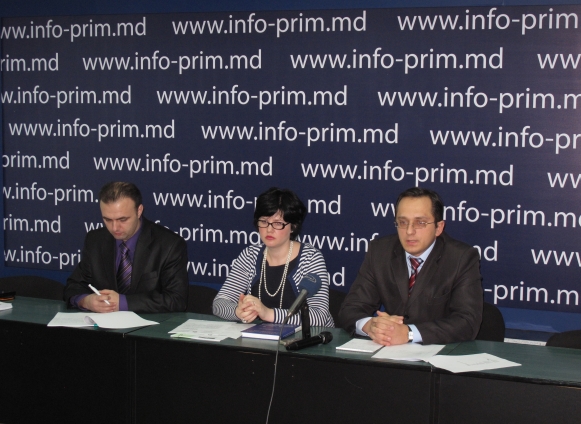
 On February 19 2010, at a press conference in Chisinau, the ‘Promo-LEX’ Association launched the study “The right to property in the Transnistrian region of the Republic of Moldova”. The study examines the situation concerning the legal status of property in the Transnistrian region, and discusses matters connected with the appearance of the right to property, its exercise, and how it is defended in the region. The study furthermore identifies the causes of various problems connected with the right to property in the region. The study offers a new vision on the right to property through the classification of property and the elucidation of the status applied to property, with reference to reports made by well-known researchers and specialists in the field of law.
Besides familiar infringements of the right to property -concerning, for instance, the passage of goods through internal customs posts; restrictions placed upon vehicles with Moldovan registration in the Transnistrian region (and the reverse, of those with TMR registration); the non-payment of pensions to the elderly and disabled; and the indexation of savings- the study discusses four further problems connected with the exercise of the right to property: Firstly, it talks about the right to property over land, which in the region is considered to belong completely to the ‘state’, despite the fact that, to a large degree, the land has passed into the hands of various shadowy individuals connected to the regional elite. The second problem concerns the privatization of businesses carried out contrary to the national legislation, in conditions of non-transparency. The third problem concerns violations of the rights of former deportees, who cannot benefit from the rights now offered to them by national legislation. The final problem examined has to do with the indexation of savings. In concluding, the study shows that these areas could, in the future, be focal points for various disputes and instances of litigation that could massively affect the interests of private persons, as well as of the state in general.
A further chapter explores the functioning of the mechanisms for protecting the right to property, which in principle do not exist in the region. The study points to systematic problems connected to the non-functioning of national courts, and likewise brings into view the functioning of the so-called courts and prosecutors in the Transnistrian region.
The study was realised with financial support from the Civil Rights Defenders. The study is available in Romanian, Russian and English, and can be accessed in electronic PDF format on the Promo-LEX website under the heading Publications.